You’ve probably got three “free” AI voice generators open in your tabs right now — and at least one of them, Play.ht, has been dead since January 1, 2026. Meta acquired it, shut it down permanently, and deleted every account, audio file, and API endpoint. Gone. The others still standing call themselves “free” but mean wildly different things: one gives 10 minutes per month, another gives 10 minutes once across your entire lifetime, and two give unlimited audio forever because they’re open-source. Picking the wrong one and building a workflow around it costs you a week.
Short answer: ElevenLabs for the best voice quality on the free tier (10 min/month, no commercial rights), Kokoro for truly unlimited, commercially-licensed audio at zero cost, and Chatterbox if voice cloning is what you’re actually after and $30/month feels premature. Here’s how each one works — and where each one quietly falls short.
Some links below are affiliate links. They don’t change what you pay, and tools are chosen on merit — including the parts where they fall short.

All 6 tools compared: free-tier limits at a glance
The open-source wave changed this comparison in 2026. Models like Kokoro and Chatterbox now deliver quality close enough to commercial tools that the “just pay for ElevenLabs” default no longer applies automatically. The table below reflects that shift.
| Tool | Best for | Watch out for | Free tier / starting price |
|---|---|---|---|
| ElevenLabs | Realism on short clips | No commercial use on free; 10 min/month cap | Free (10 min/mo) / from $5/mo (at time of writing) |
| Kokoro | Unlimited commercial audio, zero cost | No cloud dashboard; browser or self-hosted only | Free forever (Apache 2.0 open-source) |
| Chatterbox | Voice cloning + emotion control, free | Newer; community docs and integrations thinner than ElevenLabs | Free forever (MIT open-source) |
| Murf AI | Polished studio UI for one-off projects | Free is 10 min total lifetime — not monthly | Free (10 min lifetime) / from $29/mo (at time of writing) |
| Fliki | Voice + video in one workflow | Watermark on free; hard 5 min/month ceiling | Free (5 min/mo) / from $28/mo (at time of writing) |
| Speechify | Long-form listening and accessibility | Free trial requires a credit card; basic voices sound robotic | Free trial / from $11.58/mo annual (at time of writing) |
ElevenLabs — best voice quality, but one trick most guides miss

ElevenLabs remains the benchmark for naturalness. Its Multilingual v2 handles intonation and emotional range well enough that most casual listeners don’t flag it as synthetic — especially on shorter narration runs. The free tier gives you 10,000 credits per month, which translates to roughly 10 minutes using the default Multilingual v2 model.
Here’s the trick almost no comparison article mentions: switch from Multilingual v2 to the Flash model and those same 10,000 credits cover about 20 minutes. Same free plan, double the output. Flash is slightly less expressive on heavy emotional content, but for straightforward narration or explainer scripts, most audiences won’t notice. If you’re hitting the monthly cap, try this before upgrading.
Two genuine limitations. First, there’s no commercial license on the free plan — publishing monetized YouTube content or client deliverables isn’t covered. Second, each generation run caps at 2,500 characters, so any script over about 400 words needs to be split and stitched. A 10-minute video with dense narration might require six separate exports.
For a creator auditioning 15 voice styles before committing to a series tone, the free tier is plenty. For someone posting three videos a week with three minutes of narration each, you’ll hit the ceiling around day ten. Paid plans start from $5/month — check ElevenLabs’ pricing page for current plan details.
Kokoro — genuinely unlimited, commercially licensed, and free

Kokoro is an 82-million-parameter open-source TTS model released under the Apache 2.0 license. That last part matters more than the parameter count: Apache 2.0 means you can generate audio, publish it in monetized content, embed it in paid products, and distribute it freely — no attribution required, no monthly credit refill to worry about, no plan upgrade path. It’s just free.
Quality benchmarks put it just below ElevenLabs in TTS Arena rankings — not identical, but close enough that most viewers won’t notice on a fast-paced explainer video or a podcast intro. The hosted browser version at voice-generator.pages.dev requires no sign-up and runs entirely client-side. Choose from 48 voices across eight languages: English, Japanese, Chinese, French, Italian, Portuguese, Spanish, and Hindi.
The honest limitation is the interface. There’s no project dashboard, no script editor with timing controls, no cloud history. You paste text, pick a voice, download the file. That’s it. For a developer building a course platform or an automated newsletter audio workflow, the API integration is clean and documented. For a creator who wants a Murf-style studio experience with drag-and-drop audio mixing, it’s the wrong tool. Also: if your content is in Korean or Arabic, check the Hugging Face model card first — those languages aren’t in the current voice set.
Try it at the Kokoro Web hosted version or explore the model on Hugging Face. For a deeper look at building voice cloning workflows, our guide on AI voice cloning options covers where Kokoro fits in a production pipeline.
Chatterbox — voice cloning without a subscription

Chatterbox is Resemble AI’s MIT-licensed open-source TTS model, and in mid-2026 it’s the strongest case for not paying for voice cloning at all. Feed it five seconds of audio and it approximates that voice across new scripts — with emotion control on top. The Multilingual V3 release supports 23+ languages and keeps hallucination rates low, which matters for long scripts where synthetic voices sometimes insert phantom syllables or shift pacing mid-sentence.
Resemble AI’s own benchmarks show Chatterbox outperforming ElevenLabs on conversational naturalness in blind listening tests. Take that with appropriate skepticism — those are developer-run benchmarks, not independent audits. What’s not disputed: it’s genuinely competitive, and the MIT license makes it commercially usable without restrictions.
The real gap is ecosystem maturity. ElevenLabs has years of tutorials, Zapier integrations, community workflows, and documented edge cases. Chatterbox has an active GitHub repo and growing community, but if something breaks at 11pm the night before a deadline, you’ll find answers faster for ElevenLabs. Sub-200ms latency makes it viable for real-time applications, which is a practical advantage if you’re building something interactive rather than just generating narration files.
Access it free at Resemble AI’s Chatterbox page.
Murf AI — the “free plan” that’s actually a one-time trial
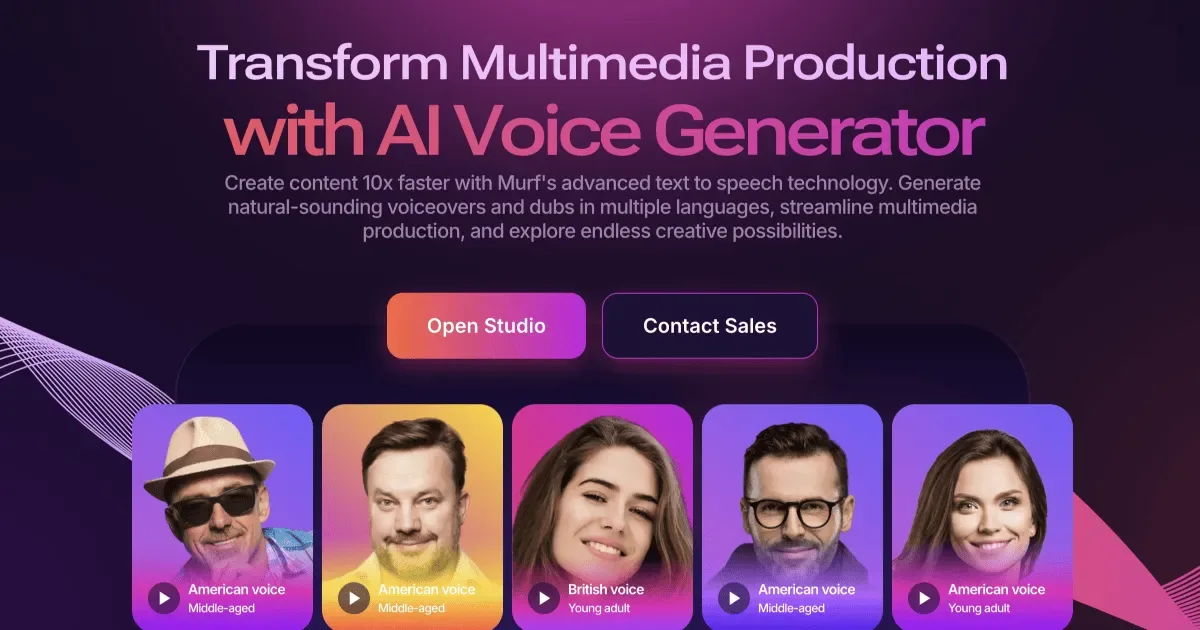
Murf has one of the better studio interfaces in this space: multi-voice project support, background music mixing, a script editor with timing controls, and a library of 200+ voices across 20+ languages. It’s good software. The problem is how the free plan is described.
That 10-minute free allocation is a lifetime total — not a monthly reset. Use it up and the free tier is gone. Most articles comparing Murf list it as a “free plan” without clarifying this, which leads creators to build their first project around it and then hit a paywall mid-script. It’s a trial, not a recurring free tier in the way ElevenLabs or Fliki are.
Use the trial window strategically: pick your target voice, run the full character range you’ll need for your project, and make the buy/no-buy decision based on that sample. Korean-language creators specifically: Murf’s Korean voices on paid plans are among the cleaner options in the market — worth testing during the trial before committing. Paid plans from $29/month; see Murf’s pricing page for current details.
Fliki and Speechify — worth it for specific workflows, not as first picks
Fliki earns its spot for creators who want voice and video handled in the same tool. The free tier (5 min/month, watermarked) is thin, but it’s enough to test whether the workflow fits before paying. The paid Standard plan at $28/month adds 180 minutes of content, commercial rights, and a stock media library — which makes sense if you were already paying for a separate video editor. The watermark on free output is non-negotiable though: don’t publish it publicly. See Fliki’s pricing page.
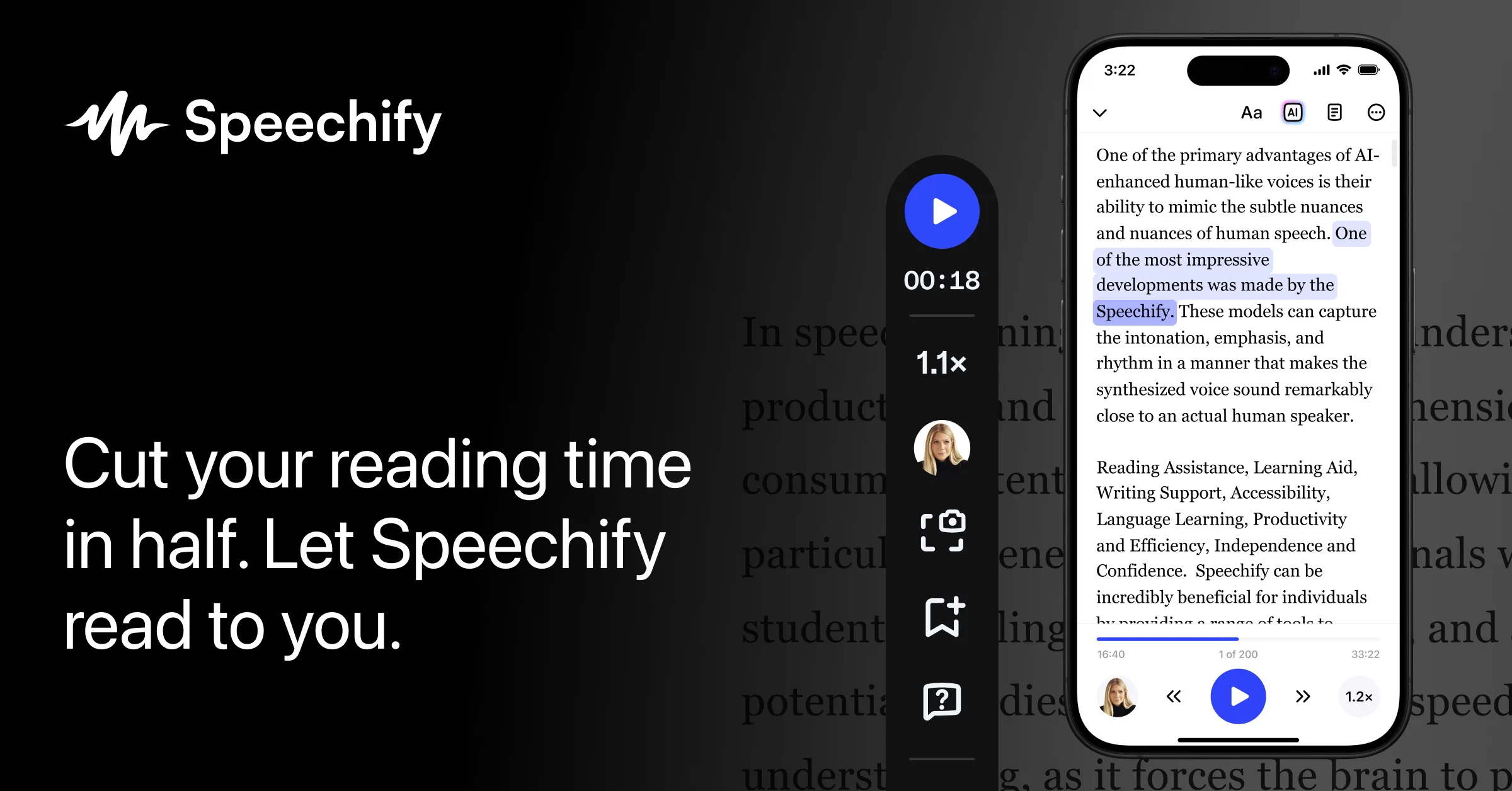
Speechify is built for consumption, not creation. The free plan offers 10 basic voices, no download option in most formats, and requires a credit card to start the trial — which is a friction point worth flagging. It handles pacing across thousands of words without drift, making it strong for long-form content listening, but that’s not the same as narrating a YouTube video. Premium runs $139/year or $29/month (at time of writing) and guarantees 1,000,000 words/month through end of 2026. Check Speechify’s official page. And if you’re building for YouTube specifically, our ranked list of AI voice generators for YouTube creators digs into which voice styles actually retain viewers past 30 seconds.
Frequently asked questions
Q. Can I use free AI voice generators commercially — for monetized YouTube videos or paid client work?
It depends on the tool. Kokoro (Apache 2.0) and Chatterbox (MIT) both allow full commercial use with no restrictions, even on their free tiers. ElevenLabs explicitly prohibits commercial use on the free plan — you need a paid plan for monetized content. Murf and Fliki also restrict commercial rights to paid plans. To stay safe, publish monetized content only under a paid plan with explicit commercial rights, or use an open-source model like Kokoro or Chatterbox. Licensing terms can change, so always confirm on each tool’s official page before publishing.
Q. What happened to Play.ht — and what’s the best replacement?
Play.ht was acquired by Meta in July 2025 and permanently shut down on December 31, 2025. All accounts, saved audio, and API endpoints were deleted. For API-based use cases, Kokoro and Chatterbox are the closest free replacements; for commercial teams that need the studio interface and quality level Play.ht offered, ElevenLabs is the nearest paid alternative.
Q. How much audio can I actually generate for free each month before hitting a paywall?
ElevenLabs gives roughly 10 minutes/month on Multilingual v2, or around 20 minutes if you switch to the Flash model. Fliki gives 5 minutes/month. Murf gives 10 minutes total, once, across your entire account lifetime — not a monthly reset. Kokoro and Chatterbox have no cap at all. These figures come from published pricing pages as of mid-2026; verify on each tool’s official page before building a production workflow around them, as limits do change.
Which one should you actually start with?

Start with ElevenLabs if voice quality is the deciding variable and you’re still evaluating which voice fits your brand — 10 minutes/month is enough to audition and decide. Start with Kokoro if you need commercial-ready audio right now and paying anything feels premature; the browser version works in five minutes. Start with Chatterbox if voice cloning is the specific feature you need and you’re comfortable with a GitHub-based tool.
Murf, Fliki, and Speechify are worth trialing only after you’ve identified a gap the first three can’t fill — Murf for studio workflow, Fliki for video integration, Speechify for long-form listening. Not as starting points.
One concrete next step: take the same 90-second script, run it through ElevenLabs’ free tier and Kokoro’s browser tool back to back. The gap you hear — or don’t — tells you whether the quality difference is worth paying for in your context.